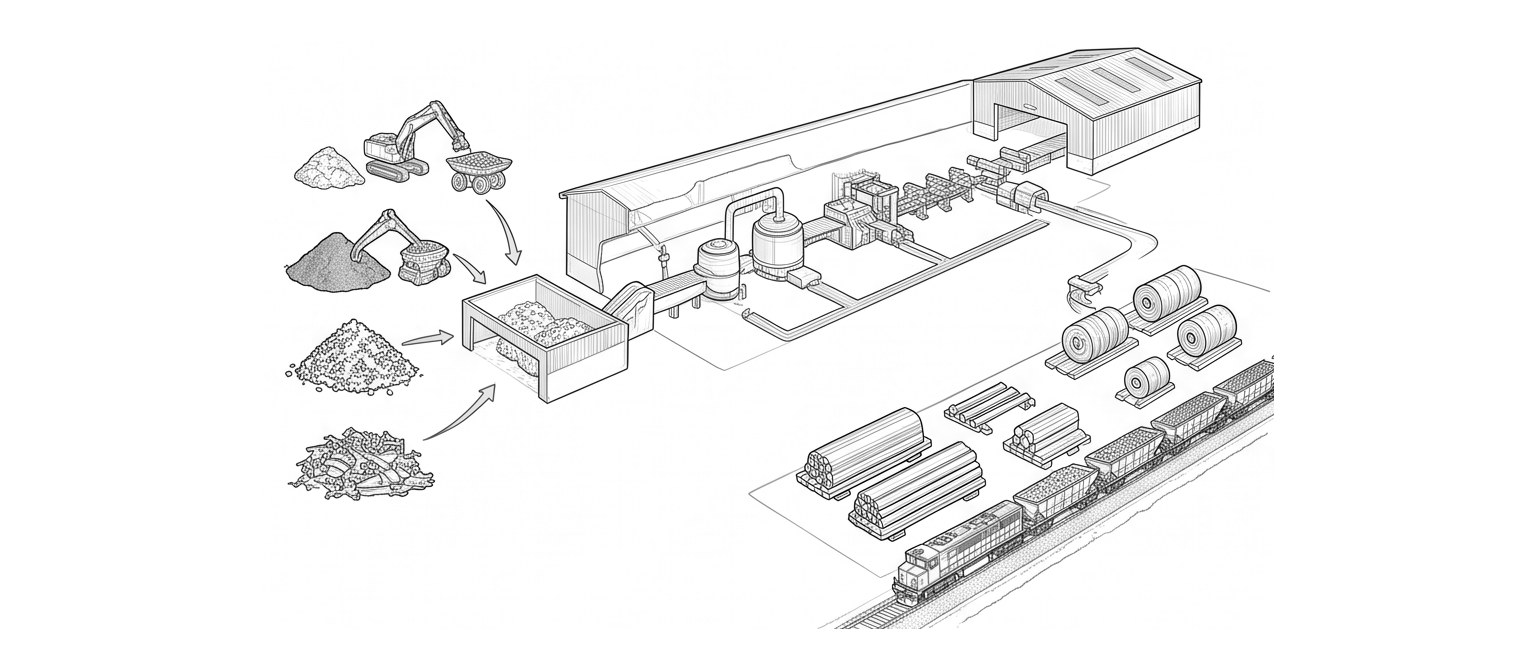
Our business model links material acceptance, procurement economics, logistics capacity and documentary settlement within a defined transaction scope.
Specification, procurement and delivery integration
We review physical supply alongside working capital, operating costs and transport constraints. Material price alone does not establish delivered value: preparation, inspection, freight, terminal handling, financing and receiving conditions affect transaction economics.
We define the transaction by grade, quantity and tolerance, analysis or dimensional basis, delivery period and named place. Inspection, acceptance, cost allocation, transfer of risk and payment obligations require separate contractual provisions.
Our longer-term evaluation considers supply continuity, technical compatibility and asset lifecycle assumptions. Development opportunities require evidence of capability and a defined responsibility boundary; they do not establish ownership, exclusivity or guaranteed performance.
Technical and commercial scope
Trading perspective
Comparing offers against specification, delivered-cost basis and customer demand.
Asset perspective
Reviewing equipment condition, maintenance scope and lifecycle expenditure.
Integrated perspective
Aligning funding, process requirements and transport capacity with agreed scope.
Transaction definition and interface review
Opportunity
Identify end use, grade, volume and delivery period.
Alignment
Reconcile acceptance criteria, delivered cost and transport scope.
Agreed scope
Confirm specification, inspection, risk and settlement provisions.
Long-term outlook
Review supply continuity and lifecycle development assumptions.
Indicative transaction interfaces — not a confirmed organizational structure, approval system or operating procedure.