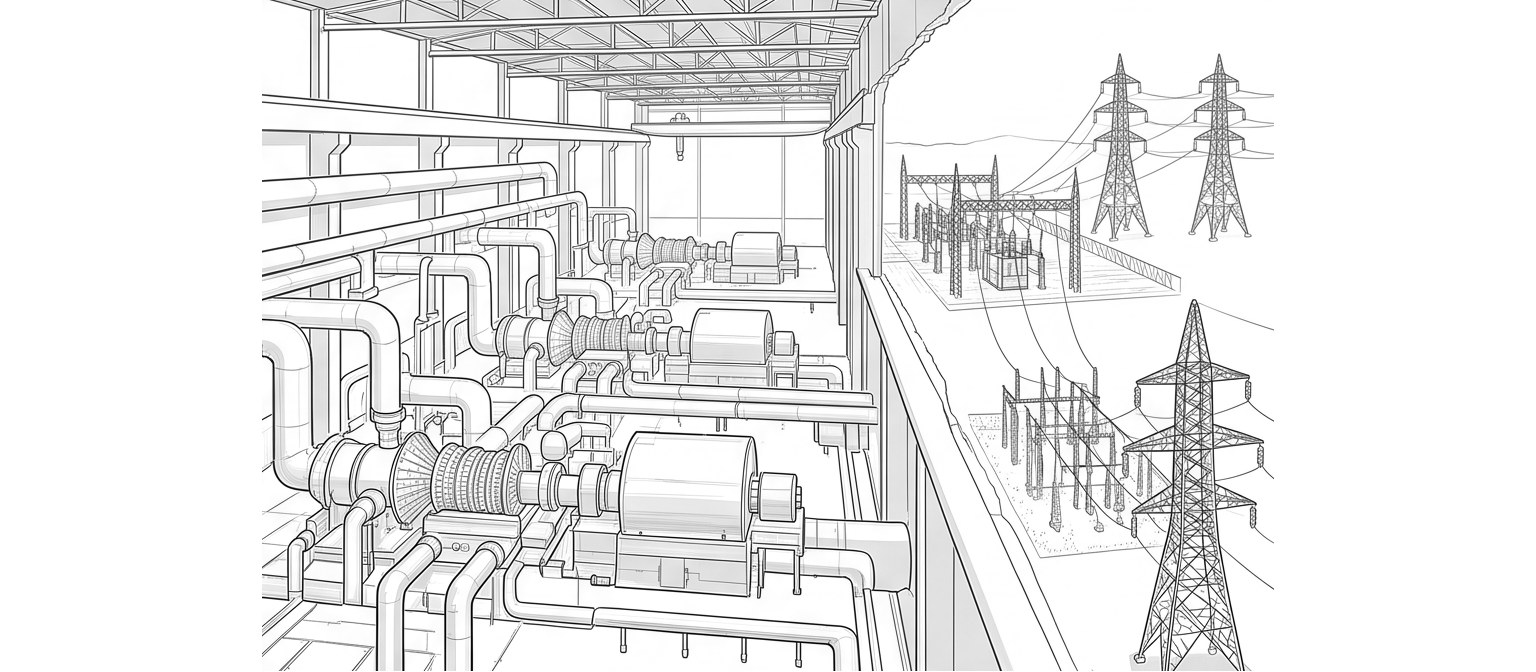
We assess fuel compatibility, energy-demand profiles, project cost boundaries and generation-system interfaces; asset scope requires confirmation.
Energy Infrastructure, Industrial Fuel Supply & Technical Project Development
Our business perspective connects energy development and supply with industrial demand and strategic investment. Fuel selection and project evaluation require both engineering analysis and commercially defined responsibilities. The technologies below are industry context, not a list of confirmed DEKOM-owned generation assets.
Industrial Energy Supply
A fuel proposal must match the boiler, kiln or furnace rather than only a price per tonne. Thermal coal and anthracite differ in ignition, volatile matter and combustion behavior; petroleum coke is an additional industry fuel category, not a confirmed DEKOM offering. Review considers calorific value, ash, moisture, sulfur, grindability, sizing and storage characteristics.
Fuel handling capacity, burner design, ash removal and permitted emissions can constrain acceptable grades. Supply continuity depends on shipment frequency, inventory strategy, receiving capacity and agreed alternatives. A fuel’s laboratory value does not by itself establish acceptable operating performance.
Energy Project Development
A typical project starts with preliminary feasibility, site assessment and energy-demand analysis, followed by technology selection and CAPEX estimation. OPEX modeling needs fuel, utilities, staffing, maintenance, consumables and expected utilization rather than only equipment purchase cost.
Engineering and procurement translate requirements into equipment and interface specifications. Construction coordination, commissioning and acceptance testing then establish readiness for operation. Performance monitoring compares actual output and consumption with agreed design conditions; the scope and responsible parties must be defined for each project.
Power Generation and Industrial Efficiency
Thermal generation converts fuel energy into steam and electrical output through boiler and turbine systems. Boiler losses, steam conditions, auxiliary loads and condenser performance influence net efficiency. Heat recovery and combined heat and power can improve useful energy utilization where a suitable heat demand exists.
Renewable integration and electrical distribution require assessment of load profiles, network connection, protection, intermittency and backup needs. Industrial efficiency opportunities include improved combustion control, insulation, heat recovery and efficient motors, subject to engineering review and measured baselines.
Energy Supply Economics
Useful energy cost reflects delivered fuel price, its net calorific value and conversion efficiency, with consistent units and analytical bases. Heat rate expresses energy input per unit of electrical output; lower heat rate indicates higher efficiency only when the same boundary and units are compared.
Capacity factor compares actual energy generated with nameplate capacity multiplied by the period. Availability measures readiness to operate and is distinct from dispatch or utilization. Maintenance, auxiliary consumption and fuel logistics affect the total cost of supply.
Levelized cost of energy relates discounted lifetime costs to discounted energy output. Results depend on capital cost, operating profile, fuel assumptions, financing, lifetime and the discount rate. We publish no project-specific cost or performance estimate without supporting inputs.
Industrial Energy Risk Management
Risk evaluation addresses supply interruption, energy and currency movements, fuel variability, equipment reliability and emissions obligations. Contingency planning can consider inventory, alternative supply routes and technically acceptable substitute fuels.
Any substitution must be assessed against plant capability, permits and contractual requirements. Project guarantees, emissions compliance and operational results cannot be inferred from the general descriptions on this page.