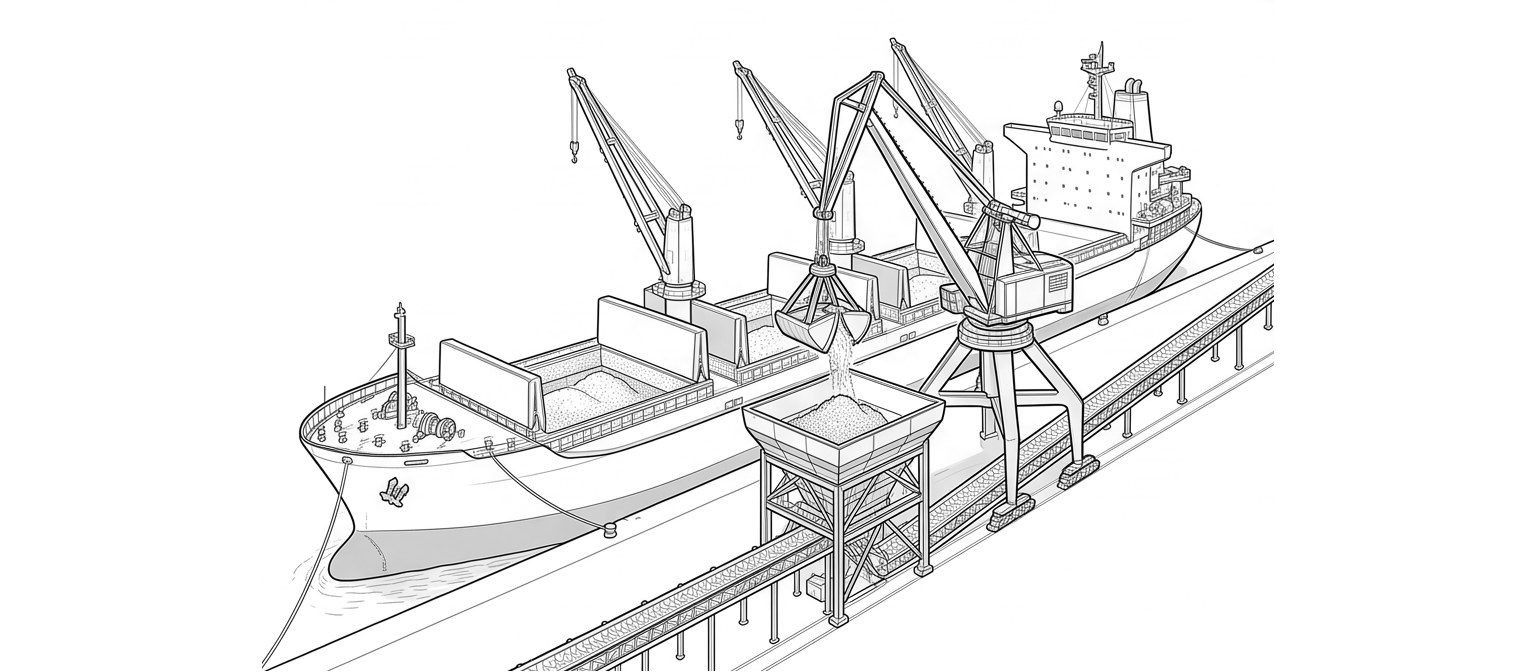
We assess maritime movements by cargo properties, vessel and berth compatibility, loading and discharge capacity, and charter or carriage conditions.
Bulk ore and coal require cargo-specific review of moisture, particle size, bulk density and applicable marine hazards. Steel and packaged cargo require suitable lifting attachments, dunnage, stowage and securing. Vessel suitability depends on hold condition, dimensions, draft, gear and terminal restrictions.
Planning aligns cargo readiness and the vessel arrival window with berth access and the contracted handling rate. Laytime, notice of readiness, demurrage and despatch depend on the relevant charter terms. Transport responsibilities and documentation remain subject to agreement; no DEKOM-owned fleet or terminal network is implied.
Our maritime focus
Industrial cargo
Quantity, stowage properties, moisture and lifting or discharge requirements define the cargo review.
Logistics interfaces
Draft, berth geometry, vessel gear, hopper or conveyor capacity and discharge access require confirmation.
Commercial handover
The chosen Incoterm, named place, bill of lading and charter provisions address distinct obligations.
Cargo to destination
Indicative specification-to-delivery interfaces; sequencing and responsibilities depend on the agreed transaction.
Cargo
Cargo specification, quantity and hazard documentation
Loading
Berth readiness, stowage and contracted loading scope
Sea transport
Carriage terms, voyage updates and shipping documents
Destination
Discharge, survey and agreed delivery handover
Commercial interface model, not a confirmed operating procedure. Inspection, handling, risk transfer and settlement obligations require contractual agreement.
Our shipping discussion
- Technical acceptance basis
- Define grade, analysis or dimensional basis, exact standard and edition, tolerances, sampling and required inspection evidence.
- Delivery and receiving constraints
- Specify lot quantity, shipment window, named delivery place, transport mode and receiving equipment or discharge limits.
- Contract and documentary scope
- Agree price and payment basis, Incoterm, quantity determination, required certificates and the procedure for discrepancies and claims.